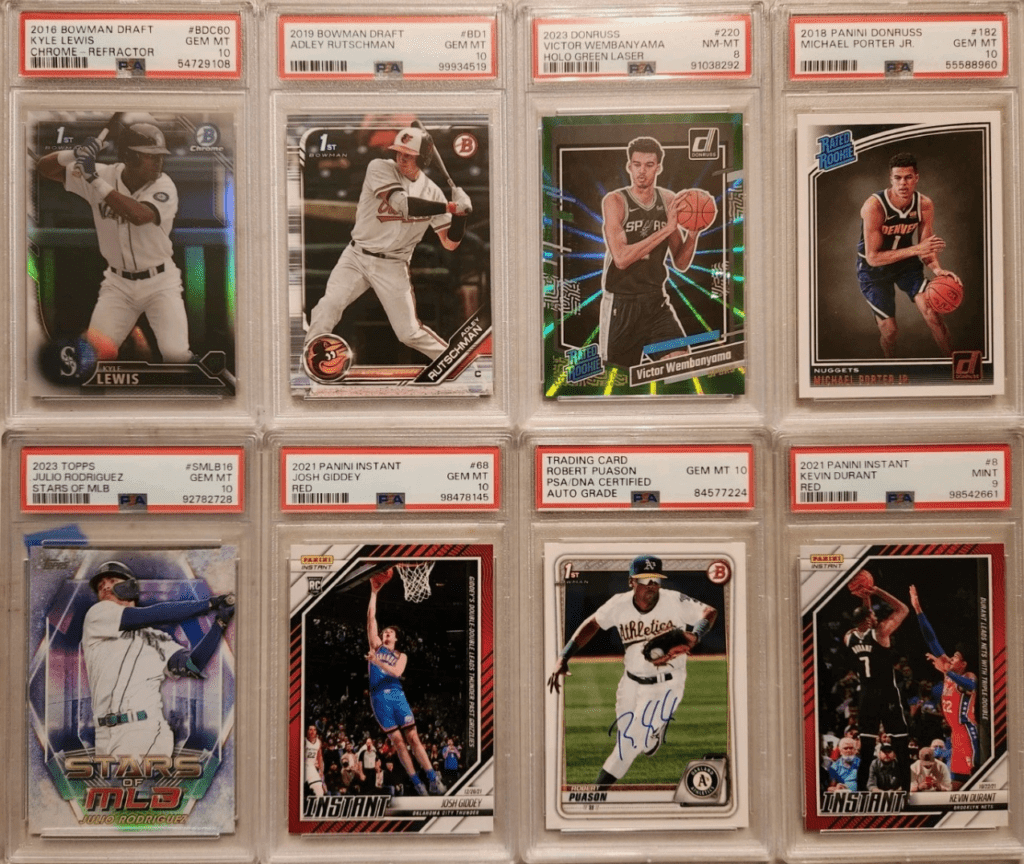
What Is a Rookie Card? The Most Important Card in a Player’s Career
Ask almost any sports card collector what card matters most for a player…
They’ll say the rookie card.
A rookie card is generally considered the first officially licensed trading card of a player released in a major set during their debut professional season.
It’s the card that represents the beginning.
And in many cases, it becomes the most valuable card of that player’s career.
Why Are Rookie Cards So Important?
Rookie cards carry weight because they mark a player’s entry into the league (like MLB, NBA, NFL, NHL, MLS and many more).
They represent:
When a player becomes an MVP, champion, or Hall of Famer, collectors often look back to their rookie card as the cornerstone collectible.
Rookie Cards in Baseball
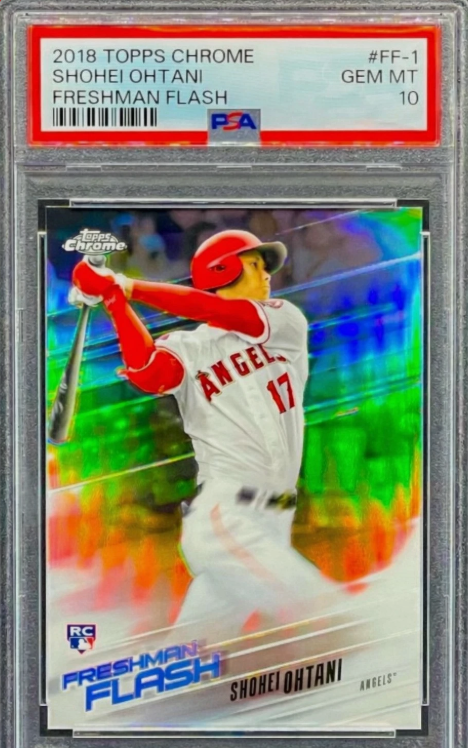
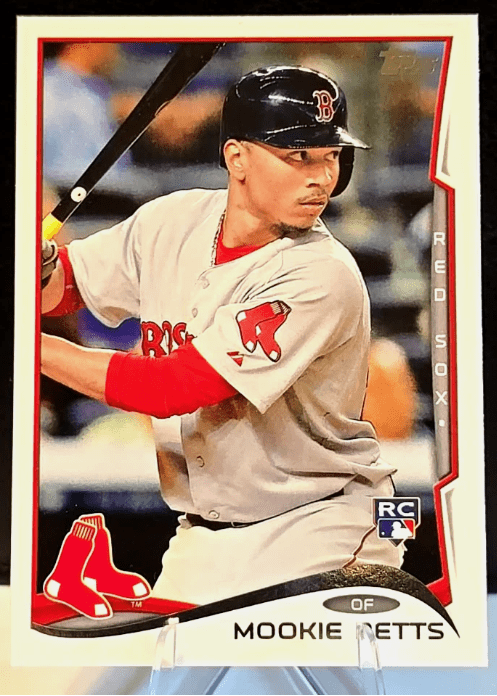
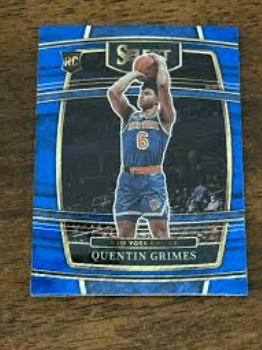
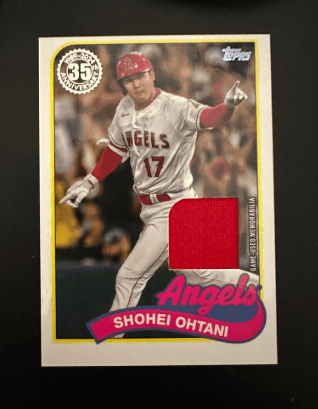
In baseball, rookie cards are typically identified by a rookie logo (RC) printed directly on the card by companies like Topps.

Mookie Betts rookie card
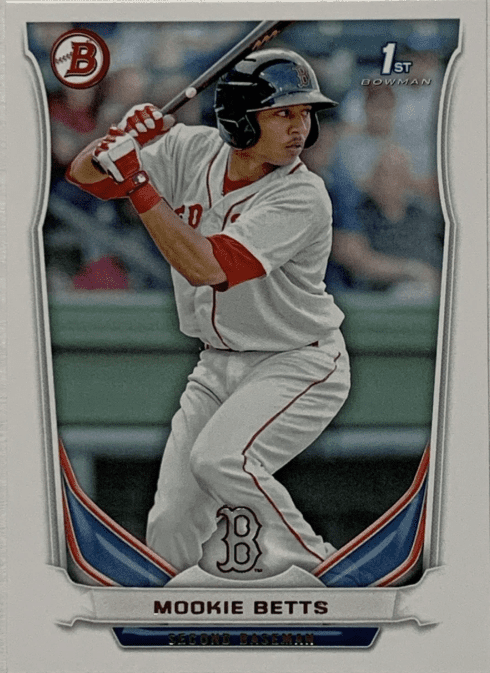
However, baseball also has another layer: the “1st Bowman.”
Mookie Betts 1st Bowman card
A 1st Bowman card often represents a prospect’s first licensed card before their official MLB rookie season. Some collectors value these just as highly – sometimes even more – depending on timing and hype.
Types of Rookie Cards
Not all rookie cards are created equal. There are tiers:
Base Rookie Card
Standard version from the main set.
Rookie Parallels
Color variations or serial-numbered versions.
Rookie Autographs
Signed cards from the player’s rookie year – often the most desirable modern version.
Short Print Rookie
Limited production variations within the rookie checklist.
Scarcity plus star power equals serious demand.
Do Rookie Cards Hold Value?
They can – especially in high grade.
Condition is critical. A card graded by companies like PSA, Beckett, and SGC, a Gem Mint condition can dramatically increase in value compared to a raw version.
But value depends on:
-
Career performance
-
Championships
-
Awards
-
Market timing
-
Overall hobby demand
A hyped rookie can spike quickly. A Hall of Fame career builds long-term stability.
Create Your Own Rookie Card with NCASE Custom Cards
A rookie card marks the beginning of a player’s journey, and with NCASE custom cards, you can create your own. Our customizer lets you add an official-style RC (rookie card) logo to your design, just like cards from Topps, Panini, and Upper Deck.
NCASE CARDS custom rookie card logo.
Custom rookie cards are perfect for Little League, AYSO, travel teams, high school, and first-year athletes. With full personalization, pro-style layouts, and display-ready protection, NCASE custom sports cards let you celebrate the rookie season with a true collectible.
NCASE Custom Baseball card with the RC logo.
Why Collectors Chase Rookie Cards
Rookie cards combine speculation and history.
You’re betting on potential.
You’re preserving the beginning.
You’re owning the origin story.
There’s something powerful about holding the first card of a player who later becomes legendary.
That’s why these cards remain the backbone of sports card collecting.
They represent possibility.
And possibility is what keeps the hobby exciting.
How Do I Evaluate Card Condition Before Grading?
Before you submit a card for grading, there’s one question you need to answer:
What do I realistically think this will grade?
Learning how to evaluate card condition before grading can save you money, time, and disappointment. A quick surface glance isn’t enough. You need to inspect the card like a grader would.
Here’s how experienced collectors do it.
Start With the Four Grading Pillars
Professional grading companies like PSA and Beckett Grading Services typically evaluate four major areas:
-
Centering
-
Corners
-
Edges
-
Surface
Let’s break each one down.
1. Centering
Look at:
Even a clean card won’t earn a Gem Mint grade if centering isn’t nearly 50/50.
Tip: Use a centering tool or ruler if you want precision.
2. Corners
Corners are one of the biggest grade killers.
Inspect under bright light:
Modern chrome cards chip easily. Vintage cards often show natural wear. Even tiny corner dings can drop a card from a 10 to an 8.
3. Edges
Edges can hide flaws you don’t see at first glance.
Tilt the card under light and look for:
-
Chipping
-
White spots
-
Rough cuts
-
Factory edge wear
Dark-bordered cards make edge flaws more visible which is why high grades on black-bordered sets are harder to achieve.
4. Surface
Surface issues are often overlooked.
Check for:
Hold the card at different angles under strong lighting. Surface flaws sometimes only appear when light reflects directly across the card.
Check for Print Defects vs Damage
Not all flaws are handling damage.
Some issues are factory print defects:
-
Roller lines
-
Off-center cuts
-
Registration blur
Grading companies still count these against condition. “It came out of the pack that way” doesn’t guarantee a high grade.
Be Honest With Yourself
One of the biggest mistakes collectors make is overestimating condition.
If you think it’s a 10, ask yourself:
If you see multiple minor flaws, it’s likely an 8 or 9 — and that’s okay. Not every card needs to be a Gem Mint 10 to hold value.
Final Thought
Evaluating card condition before grading is a skill.
The more cards you inspect, the better your eye becomes.
Grading rewards discipline.
It punishes optimism.
The smartest collectors send cards they’ve already judged critically — not emotionally.
How to Submit a Card for Grading: Step-by-Step Guide for Collectors
So you pulled a big rookie.
Or found a clean vintage card in your collection.
Now you’re thinking…
“Should I grade this?”
Submitting a card for grading isn’t complicated — but doing it correctly matters. Packaging mistakes, wrong service levels, or poor prep can cost you money.
Here’s how the card grading process works.
Step 1: Decide If the Card Is Worth Grading
Before submitting, ask:
-
Is the card valuable in high grade?
-
Does condition look strong (sharp corners, good centering, clean surface)?
-
Will the grading fee make financial sense?
Grading is most common for:
Submitting low-value base cards usually isn’t worth the fee.
Step 2: Choose a Grading Company
Each company has different pricing tiers, turnaround times, and market perception.
Research:
Step 3: Create an Online Submission
Most grading companies require you to:
-
Create an account
-
Enter card details (year, set, player, card number)
-
Select a service level
-
Declare a value
The declared value impacts the fee tier and insurance coverage.
Be accurate. Mistakes slow down processing.
Step 4: Prepare the Card Properly
This step is critical.
-
Place the card in a penny sleeve
-
Insert it into a semi-rigid card holder (Card Saver style preferred by many companies)
-
Do NOT use top loaders unless specified
-
Do NOT tape directly on the holder
Clean hands. No wiping the surface. No “fixing” corners. Altered cards can be rejected.
Step 5: Package and Ship Securely
Always ship securely. You’re mailing potential value.
Step 6: Wait for the Grade
Once received, the grading company will:
Turnaround times vary based on service level and demand.
What Happens After Grading?
When your graded card returns, you’ll have:
If you hit a Gem Mint 10, congratulations.
If you get an 8 or 9, it’s still a preserved, authenticated asset.
Final Thought
Submitting a card for grading is part strategy, part patience.
Choose wisely.
Package carefully.
Understand the market before you send.
Grading doesn’t guarantee value — but when done correctly, it can significantly elevate the right card.
What Is Card Grading? Why Condition Changes Everything
Two identical cards.
Same player. Same year. Same set.
One sells for $75.
The other sells for $750.
What’s the difference?
Condition – and grading.
Card grading is the professional evaluation of a trading card’s condition by a third-party company. Once graded, the card is sealed in a protective holder and assigned a numerical score that reflects its overall quality.
In today’s market, grading can dramatically affect value.
What Does Card Grading Measure?
Professional grading companies evaluate four main categories:
-
Centering – How evenly the card’s image is positioned
-
Corners – Sharpness and wear
-
Edges – Chipping or imperfections
-
Surface – Scratches, print lines, dents, gloss
Each factor contributes to a final grade, typically on a 1–10 scale.
A “Gem Mint 10” represents near-perfect condition.
An 8 or 9 may still be excellent — but small flaws can reduce value significantly.
Who Grades Trading Cards?
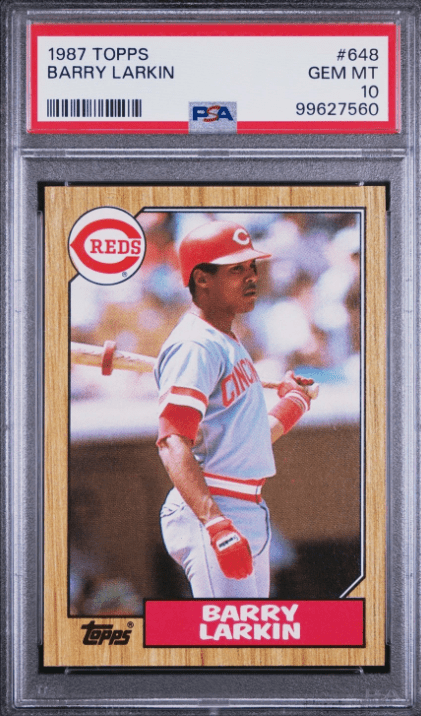
-
PSA (Professional Sports Authenticator)
1987 Topps Barry Larkin PSA 10 graded baseball card
-
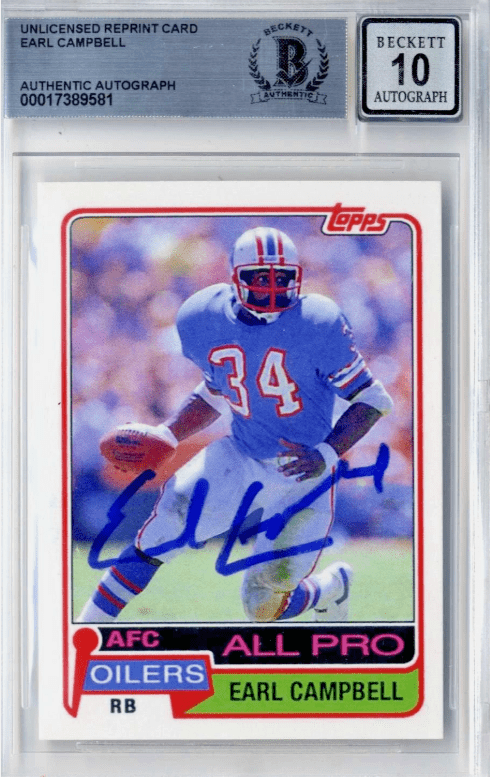
Beckett Grading Services
Earl Campbell Beckett 10 graded sports card.
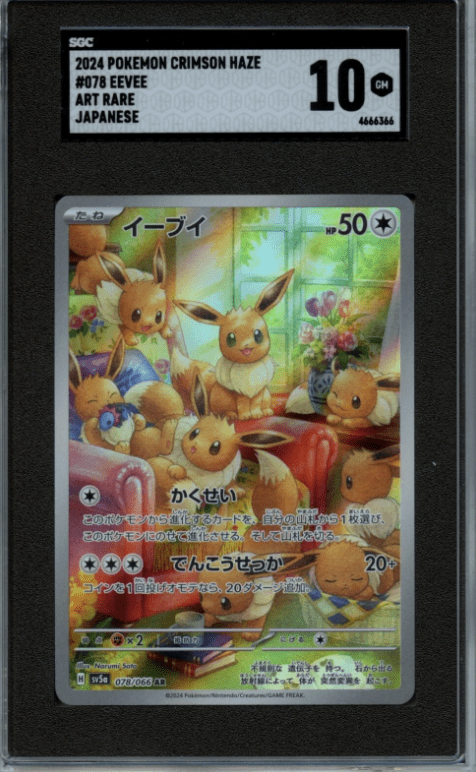
SGC
2024 Pokemon SGC 10 graded TCG Card
Each company seals the card in a tamper-evident plastic holder, often called a “slab,” with the grade and certification number displayed.
Collectors value grading because it adds:
-
Authentication
-
Condition transparency
-
Market trust
-
Liquidity for resale
Why Do Collectors Grade Cards?
There are three main reasons:
1. Increase Value
High-grade cards can sell for multiples of their raw versions.
2. Protect the Card
Slabs preserve condition long term.
3. Establish Credibility
A graded card removes condition disputes between buyers and sellers.
For high-end rookie cards, vintage baseball cards, and rare TCG cards, grading is often considered essential.
Does Every Card Need to Be Graded?
No.
Grading makes the most sense for:
Grading low-value base cards rarely makes financial sense due to submission fees.
How Grading Changed the Hobby
Before grading became mainstream, condition debates were subjective.
Today, graded cards create structured pricing tiers. A PSA 10 can command massive premiums compared to a PSA 8 of the same card.
Card grading has turned trading cards into:
Final Thought: Why Grading Matters
In modern collecting, rarity gets attention but condition determines ceiling.
Two collectors can own the same rookie card.
The graded Gem Mint version often becomes the true centerpiece.
Card grading doesn’t just evaluate cardboard.
It defines market value.
What Is a Trading Card Parallel? Understanding One of the Most Important Concepts in Trading Cards
What Is a Trading Card Parallel?
If you’ve opened modern packs, you’ve seen them.
Same player.
Same photo.
Different color.
Different shine.
That’s a trading card parallel.
A parallel is a variation of a base card that features a different color, foil treatment, pattern, or serial numbering. It runs “parallel” to the base version — same design foundation, but upgraded in rarity or visual appeal.
How do trading card Parallels Work?
Most trading card sets begin with a base checklist. From there, manufacturers create multiple parallel versions of those same cards.
For example, a standard MLB base card might have:
-
Blue parallel
-
Green parallel
-
Gold /50
-
Orange /25
-
Red /5
-
1/1 Superfractor
Same card. Increasing scarcity.
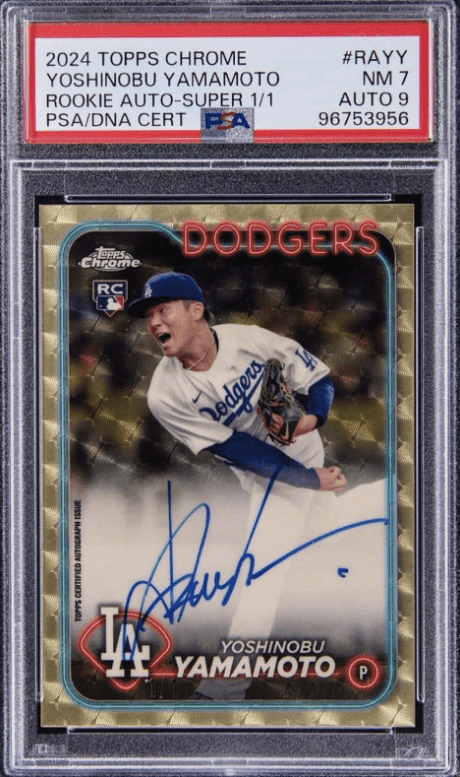
2024 Topps Chrome Yoshinobu Yamamoto Superfractor – Trading Card Parallel
In TCG products like Pokémon or Magic: The Gathering, trading card parallels often appear as:
-
Reverse holo versions
-
Full-art variants
-
Secret rares
-
Alternate art foils
Different finish. Same core card identity.
Why Do Parallels Exist?
Parallels serve a few key purposes:
1. Scarcity
Lower print runs create rarity tiers within the same set.
2. Visual Variety
Collectors love color matching team uniforms or character themes.
3. Chase Factor
Parallels give collectors something beyond the base checklist to hunt.
4. Tiered Value Structure
A base rookie card might be affordable.
The /10 gold parallel? Completely different price tier.
What Is a Rainbow?
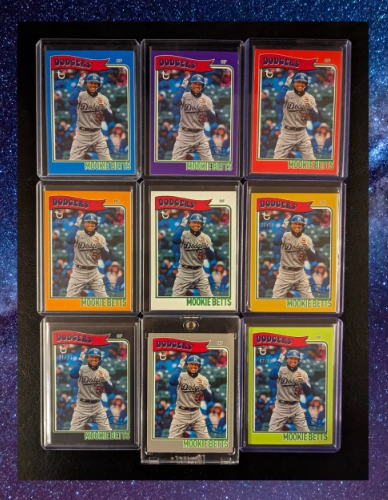
In sports cards, building a “rainbow” means collecting every parallel version of the same card.
If a card has 15 color variations, completing the rainbow means owning all 15.
It’s one of the most respected achievements in modern collecting.
Topps Rainbow Trading Card Parallel Set
Do Parallels Increase Value?
Often, yes — but it depends on:
A serial-numbered /25 parallel of a top rookie will typically command a premium over the base version. A 1/1 parallel becomes the only copy in existence, making it highly collectible.
However, not all parallels carry equal weight. Overproduction can dilute long-term value.
Why Collectors Love Parallels
Parallels combine scarcity with aesthetics.
Some collectors chase rarity.
Some chase color matches.
Some build rainbows.
Some only collect numbered versions.
Parallels add depth to modern trading cards. They create layers within a single checklist and keep products exciting long after release day.
In today’s hobby, understanding parallels isn’t optional.
It’s essential.