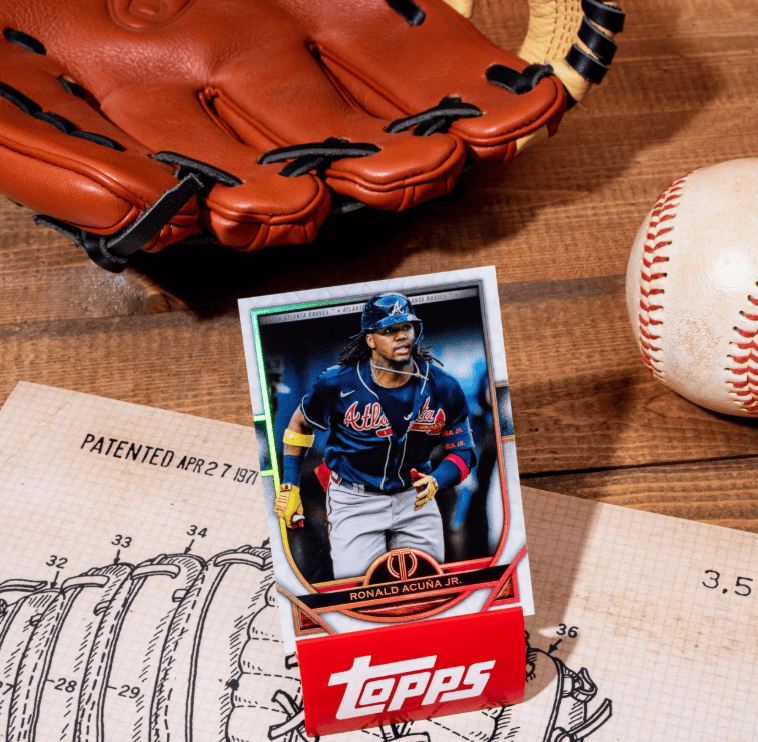
Custom vs. Traditional Trading Cards: Key Differences
Custom Trading Cards vs. Traditional Trading Cards: What’s the Difference?
Trading cards have been part of sports culture for generations. From vintage baseball cards and iconic rookie cards to modern holographic parallels and limited-edition collectibles, they have given fans a way to celebrate their favorite athletes and unforgettable moments.
But the world of trading cards is changing.
Today, collectors, athletes, parents, coaches, schools, and sports organizations have another option: custom trading cards.
Instead of collecting only professional athletes featured in traditional trading card releases, individuals can create personalized cards featuring themselves, their children, their teammates, or someone whose accomplishments deserve recognition.
So what is the difference between custom trading cards and traditional trading cards? Are custom sports cards made with the same level of quality? And which option offers the better collecting experience?
This complete guide explains how custom and traditional trading cards compare in design, printing quality, personalization, rarity, cost, collectible value, and overall purpose.
What Is the Difference Between Custom Trading Cards and Traditional Trading Cards?
The primary difference between custom trading cards and traditional trading cards is who controls the design and who appears on the card. Traditional trading cards are typically mass-produced or commercially released collectibles featuring athletes, characters, or subjects selected by established manufacturers. Custom trading cards are personalized collectibles created for a specific person, team, event, or organization.
Traditional sports cards typically feature professional athletes and are distributed through packs, boxes, sets, or individual releases.
Custom sports cards allow individuals and organizations to choose the subject, photographs, personal information, and design elements, depending on the card provider.
Both can feature professional printing, premium card stock, holographic finishes, and collectible designs. However, their purposes and secondary markets often differ.
Quick Comparison: Custom vs. Traditional Trading Cards
| Feature | Traditional Trading Cards | Custom Trading Cards |
|---|---|---|
| Featured athletes | Primarily selected by manufacturers | Selected by the customer |
| Personalization | Usually predetermined | Often highly customizable |
| Card design | Manufacturer-controlled | Customer-selected or custom-designed |
| Player photos | Professionally licensed or supplied | Uploaded or provided by customers |
| Player information | Published athlete statistics and details | Personalized names, numbers, teams, and information |
| Production | Commercial product releases | Usually made to order or commissioned |
| Premium finishes | Available on selected products | Available from participating custom manufacturers |
| Serial numbering | Available on selected cards | Possible with providers offering numbered editions |
| Collector resale market | Established for many products | Generally smaller and less established |
| Best suited for | Hobby collecting, trading, and set building | Personal keepsakes, recognition, gifts, and group collections |
Neither category is automatically better.
The right choice depends on whether the goal is collecting established sports memorabilia or creating a collectible that celebrates someone personally meaningful.
What Are Traditional Trading Cards?
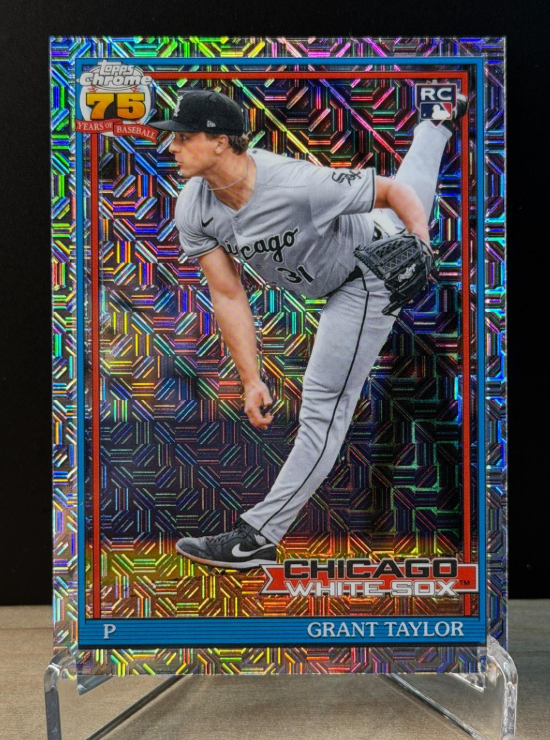
Traditional trading cards are commercially produced collectible cards featuring athletes, teams, entertainment characters, or other subjects.
Within the sports card hobby, manufacturers such as Topps, Panini, and Upper Deck are associated with well-known trading card products and collecting traditions.
Traditional sports cards may include baseball, football, basketball, soccer, hockey, and other sports.
Collectors can purchase cards through sealed packs, hobby boxes, retail products, special releases, and secondary marketplaces.
What Makes Traditional Sports Cards Collectible?
Traditional trading cards appeal to collectors for several reasons.
Recognized athletes and teams: Cards often feature professional athletes with established fan bases.
Established product lines: Familiar brands and sets provide collectors with recognizable products.
Rookie cards: Many collectors pursue cards associated with an athlete’s early professional career.
Limited editions and parallels: Special variations may feature different colors, finishes, and production quantities.
Autographs and memorabilia: Certain releases include signatures or memorabilia-related features.
Secondary-market activity: Many traditional sports cards can be researched through public sales records, auction results, and grading databases.
The combination of sports history, established collecting traditions, recognizable brands, and market demand has helped traditional trading cards develop a substantial global hobby community.
What Are Base Cards, Parallels, and Inserts?
Traditional trading card products often contain several categories of cards.
Base cards form the primary checklist of a release.
Parallel cards are variations of base or other cards, often featuring different colors, foil treatments, or numbering.
Insert cards belong to additional subsets that may feature unique designs or themes.
Some releases also include autographed cards, memorabilia cards, and serial numbered editions.
These variations create different collecting opportunities, from completing a base set to chasing rare cards of a favorite athlete.
What Are Custom Trading Cards?
Custom trading cards are personalized collectible cards created using a customer’s selected photographs, names, player information, designs, or other details.
Unlike traditional sports cards, custom trading cards do not require the featured athlete to be a professional player or part of an established manufacturer’s checklist.
A youth baseball player, high school football athlete, recreational soccer player, basketball team, or adult sports league participant can be featured on a custom card.
Personalized trading cards can also celebrate coaches, teachers, graduates, employees, family members, performers, and other individuals.
What Information Can You Put on a Custom Trading Card?
Depending on the manufacturer and available customization tools, a personalized trading card may include:
- Athlete’s name and photograph
- Team or league name
- Jersey number and position
- Team colors and approved logos
- Player biography or achievements
- Personalized messages
- Statistics or performance highlights
- Holographic or foil design options
- Rookie-style graphics or special-edition elements
- QR codes or additional information
The defining characteristic is that the customer has input into the card’s content.
For youth athletes in particular, this creates an opportunity to enjoy a trading card experience that traditionally has been associated with professional sports.
Can Custom Trading Cards Look Like Professional Sports Cards?
Yes. Professionally manufactured custom trading cards can offer premium printing, detailed artwork, standard trading card dimensions, holographic finishes, and protective display options similar to features found throughout the traditional sports card hobby.
However, quality varies significantly among providers.
There is a substantial difference between printing a card on ordinary paper at home and ordering a professionally manufactured custom trading card.
What Makes a Custom Trading Card Professional Quality?
Several factors influence the final product.
Card stock and construction
The thickness, rigidity, coating, and material quality affect how a card looks and feels.
Printing resolution
High-quality printing helps preserve image detail, accurate colors, readable text, and clean graphics.
Cutting and finishing
Accurate trimming, consistent dimensions, and clean edges contribute to a professional appearance.
Holographic and reflective finishes
Certain custom card providers offer premium finishes that create the visual effects familiar to collectors.
Design quality
Typography, image placement, borders, player details, and overall composition influence whether a custom card feels like an authentic collectible.
Protective presentation
Acrylic slabs, protective cases, and other display accessories can improve how cards are presented, stored, and showcased.
Are Custom Trading Cards the Same Size as Traditional Sports Cards?
Many modern sports trading cards use the standard dimensions of 2.5 inches wide by 3.5 inches tall.
Professional custom trading card manufacturers can produce cards in this familiar size.
However, not every traditional or custom trading card uses these dimensions. Some manufacturers offer oversized cards, mini cards, unusually thick cards, and alternative formats.
Collectors should confirm card measurements before selecting protective sleeves or cases.
Are Custom Trading Cards as Valuable as Traditional Trading Cards?
Custom trading cards and traditional trading cards can both be valuable, but not necessarily in the same way.
Traditional sports cards often have established collector markets influenced by athlete popularity, rookie status, product reputation, condition, scarcity, and historical sales.
Custom trading cards typically emphasize personal, sentimental, commemorative, or community value.
Traditional Trading Cards and Market Value
A professionally licensed rookie card featuring a popular athlete may attract collectors across the country or around the world.
Its potential resale value can be influenced by:
- Player popularity and career achievements
- Card rarity and print run
- Manufacturer and product recognition
- Professional grading
- Autographs and special variations
- Card condition
- Supply and demand
- Comparable secondary-market sales
These established market factors give collectors a way to evaluate many traditional cards.
Nevertheless, not every traditional sports card is valuable. Many common cards have modest resale value.
Custom Trading Cards and Personal Value
A personalized card featuring a child’s first baseball season may have little established resale market, yet hold considerable value to the child’s family.
A commemorative card celebrating a championship-winning soccer team could become a treasured keepsake.
A personalized trading card honoring a retiring coach might carry an emotional significance that cannot easily be measured by auction prices.
The key distinction is that traditional trading cards often derive value from established collector demand, while custom trading cards frequently derive value from personal meaning and the story they preserve.
This does not mean custom cards can never become collectible or desirable in their own right.
Limited custom releases, signed editions, recognized creators, and special events can sometimes attract collector interest. However, such interest should not be confused with guaranteed resale value.
Why Are Custom Trading Cards Becoming Popular?
Custom trading cards offer an appealing combination of personalization, sports culture, and commemorative recognition.
Families can celebrate young athletes. Teams can create coordinated player collections. Schools can recognize students. Organizations can develop branded keepsakes.
Several features make personalized trading cards particularly attractive.
1. Anyone Can Be Featured on a Trading Card
Traditional sports cards generally feature subjects chosen by the manufacturer.
Custom trading cards allow customers to choose someone meaningful to them.
A child playing their first season of soccer can have a card.
A high school senior competing in their final football season can have a card.
An adult softball player can have a card.
For many people, the opportunity to see themselves represented on a professional-looking collectible is the most exciting part of the experience.
2. Every Card Can Tell a Personal Story
A traditional sports card generally presents information chosen for a commercial release.
A custom card offers greater flexibility.
A player might choose their favorite action photo, jersey number, team colors, and personal achievements.
A team could celebrate its championship season.
A family could create cards commemorating an athlete’s progression from recreational sports to varsity competition.
Rather than representing a moment selected by a major card manufacturer, custom trading cards can celebrate moments chosen by the people who experienced them.
3. Custom Trading Cards Make Unique Gifts
Personalized sports cards can be meaningful gifts for birthdays, holidays, senior nights, graduation ceremonies, end-of-season celebrations, and other milestones.
Unlike a traditional card purchased from a retailer, a custom card can feature the recipient or someone important to them.
4. Teams and Leagues Can Create Their Own Collections
Custom trading cards are not limited to individual orders.
Youth sports teams, recreational leagues, schools, clubs, and other organizations can create coordinated collections featuring multiple participants.
This allows players and families to collect teammates, trade cards, and preserve memories of the season.
5. Custom Cards Bring the Collector Experience to New Audiences
Many athletes dream of appearing on a trading card.
For most youth and amateur athletes, that opportunity is unlikely to come through a traditional professional sports card release.
Custom cards make a similar type of experience accessible beyond the professional sports world.
Custom Trading Cards vs. Traditional Trading Cards for Youth Sports
One of the most meaningful differences between traditional and custom cards appears in youth sports.
Traditional sports cards allow young athletes to collect their professional heroes.
Custom sports cards allow young athletes to celebrate their own participation.
Traditional Cards: Collecting Your Heroes
A young baseball player may collect cards of their favorite Major League Baseball stars.
A basketball player might build a collection featuring professional athletes they admire.
These cards create connections between fans and the broader world of sports.
Custom Cards: Becoming the Athlete on the Card
Imagine that same baseball player receiving a professionally printed card featuring their own name, team uniform, jersey number, and favorite action photograph.
Instead of collecting only professional athletes, the child becomes the featured athlete.
For parents and families, personalized trading cards can preserve moments that might otherwise live only in photographs.
For coaches and leagues, they can become a way to recognize every player’s participation.
Traditional trading cards celebrate the athletes we admire. Custom trading cards can celebrate the athletes in our own lives.
Both experiences have a meaningful place in sports collecting.
Are Custom Trading Cards Good for Teams, Leagues, and Schools?
Yes. Custom trading cards can serve as personalized keepsakes, team memorabilia, player recognition items, fundraising products, and promotional collectibles.
They are particularly relevant for organizations that want to create something memorable for a group.
Youth Sports Teams
Custom player cards can be created for baseball, softball, soccer, football, basketball, hockey, lacrosse, wrestling, and other sports.
A coordinated collection can feature each participant in the same team design.
Sports Leagues
Larger leagues can create collections representing multiple teams, age groups, or divisions.
This can help participants feel connected to the larger organization while preserving individual player recognition.
Schools and Athletic Programs
Schools can use personalized trading cards to recognize student athletes, celebrate senior seasons, commemorate championships, and highlight special achievements.
Tournaments and Events
A tournament trading card collection can commemorate participating athletes, championship teams, or notable performances.
Fundraising Programs
Some organizations use custom collectibles as part of fundraising campaigns.
For example, a youth sports league could organize a personalized card program with a fundraising contribution built into the approved pricing structure.
Such programs require a clear plan for pricing, permissions, production, distribution, and proceeds.
Corporate and Community Organizations
Custom trading cards can also be used for employee recognition, team-building activities, promotional events, branded campaigns, and special celebrations.
The format’s flexibility extends far beyond traditional sports collecting.
Can Custom Trading Cards Have Holographic Finishes and Limited Editions?
Yes. Depending on the manufacturer, custom trading cards may incorporate premium holographic finishes, metallic effects, alternate designs, and limited-edition numbering.
These features are inspired by elements collectors recognize from traditional trading cards.
Holographic Custom Trading Cards
Holographic card finishes can create reflective visual effects that change as the card moves under light.
Some providers offer rainbow or patterned holographic finishes that add visual depth and collector appeal.
A personalized card with these finishes can feel substantially different from a basic printed photo card.
Limited-Edition Custom Trading Cards
A custom trading card project can be designed around a particular production quantity.
For example, an organization might commission a limited run of 100 commemorative cards.
If the manufacturer supports individually numbered production, the cards could be marked with serial numbers such as 001/100 through 100/100.
However, numbering does not automatically establish authenticity, exclusivity, or investment value. A trustworthy limited-edition release should accurately disclose and honor the stated production quantity.
Can Custom Trading Cards Be One of One?
Yes, a custom card can be produced as a one-of-one edition when only one copy is made for that defined version.
It is important to distinguish a genuinely exclusive one-of-one production run from a card that simply features a unique name or photograph.
A personalized card may be unique in design without having an independently verifiable limited-edition program.
For collectors, clear communication about production quantities helps preserve trust.
Can Custom Trading Cards Be Professionally Graded?
Some custom trading cards may be eligible for professional grading or encapsulation, depending on the policies of the grading company and the characteristics of the card.
Eligibility is not guaranteed.
Major grading companies have different requirements for identifying, authenticating, and accepting custom-made or independently produced cards.
Collectors interested in grading a custom card should verify the company’s current eligibility rules before submitting it.
It is also important to understand that protective acrylic display cases are not the same as authenticated, professionally graded slabs.
A custom display slab can protect and showcase a card, but it does not by itself establish professional authentication or a numerical condition grade.
Are Custom Trading Cards Officially Licensed?
Not necessarily.
Traditional trading cards from licensed product lines may incorporate authorized league, team, and player rights.
Custom trading cards are not automatically officially licensed simply because they feature a sports theme or professional-quality design.
Customers and organizations should ensure they have appropriate permissions to use copyrighted photographs, protected logos, team marks, and other intellectual property.
A custom card featuring a youth athlete wearing their own team uniform is different from a manufacturer claiming official licensing from a major professional league.
Professional printing quality and official sports licensing are separate things.
This distinction is important for collectors and anyone commissioning custom trading cards.
What Is the Difference Between Homemade and Professionally Printed Custom Trading Cards?
Not all custom trading cards are manufactured the same way.
Some people create cards at home using a printer, paper, and basic design software.
Others use professional custom trading card companies that specialize in printing, finishing, and collectible presentation.
| Feature | Homemade Custom Cards | Professionally Manufactured Custom Cards |
|---|---|---|
| Printing | Consumer or home printer | Professional printing equipment |
| Card stock | Depends on materials available | Specified card materials |
| Cutting | Often cut manually | Production cutting and finishing |
| Holographic effects | Limited without specialty tools | Available from select providers |
| Design | Customer-created | Templates or professional design options |
| Consistency | Depends on individual technique | Typically more standardized |
| Production quantities | Usually small batches | Individual or group orders |
| Presentation | Basic sleeves or homemade packaging | Optional premium protective accessories |
Homemade cards can be creative and meaningful.
Professional manufacturing is often preferable when consistency, premium visual effects, and polished presentation are priorities.
Introducing NCASE CARDS: Professional Custom Trading Cards for Every Athlete
At NCASE CARDS, we believe the excitement of owning a professional-quality trading card should not be limited to professional athletes.
Our mission is to give athletes, families, teams, leagues, and organizations the opportunity to create their own personalized collectibles.
NCASE CARDS specializes in custom sports trading cards featuring professional printing, personalized designs, and premium collectible presentation.
Personalized Sports Cards
Customers can create cards featuring their own photographs, names, jersey numbers, team information, and other personalized details.
From youth baseball and football to basketball, soccer, hockey, and more, NCASE CARDS brings personalized card creation to a wide range of sports.
Premium Holographic Trading Cards
Our premium holographic cards offer a collectible appearance inspired by the reflective finishes popular throughout the sports card hobby.
NCASE Core Edition
For customers seeking premium presentation, the NCASE Core Edition combines a personalized holographic trading card with a customized acrylic slab and protective bumper frame.
The acrylic slab provides a distinctive way to present and showcase a player’s card.
Custom Trading Cards for Teams and Leagues
NCASE CARDS also supports group ordering for sports teams and leagues.
Our online team ordering system is designed to simplify personalized card creation for larger groups.
A coach or league administrator can create a team or league, share a dedicated ordering link, and allow participating families to personalize individual player cards.
Eligible group orders can then be coordinated for shipment to the designated team or league contact.
This approach makes it easier to offer personalized trading cards across entire rosters without requiring every card to be individually designed by the coach.
Celebrating More Than Professional Sports
A trading card can represent far more than professional statistics or national recognition.
It can celebrate the first goal of a season, the last game of a senior year, a championship victory, or a young athlete’s love of the game.
Explore NCASE CARDS to discover professional-quality custom trading cards for individual athletes, teams, and leagues.
Which Is Better: Custom Trading Cards or Traditional Trading Cards?
The answer depends on what you want to collect and why.
Choose traditional trading cards if:
- You enjoy collecting professional athletes or established trading card sets.
- You want to open packs and chase rare cards.
- You are interested in rookie cards, autographs, parallels, or established hobby brands.
- You value access to a more developed secondary resale market.
Choose custom trading cards if:
- You want a trading card featuring yourself, your child, or someone you know.
- You want to personalize photographs, names, teams, and design elements.
- You are creating gifts, keepsakes, or special event memorabilia.
- You want coordinated cards for a team, league, school, or organization.
- You want to celebrate a personal achievement or meaningful moment.
There is no requirement to choose only one.
A collector can enjoy traditional baseball cards featuring professional stars while also preserving their child’s baseball season through a personalized card.
In fact, these two types of collectibles often complement one another.
Frequently Asked Questions About Custom vs. Traditional Trading Cards
What is the difference between custom and traditional trading cards?
Traditional trading cards are commercially released collectibles featuring subjects selected by manufacturers. Custom trading cards are personalized collectibles featuring photographs, names, designs, and information selected by customers. Traditional cards often serve established collector markets, while custom cards frequently focus on personal memories, gifts, and recognition.
Are custom trading cards real trading cards?
Yes. Custom trading cards are physical collectibles that can use traditional card sizes, professional printing, and premium finishes. However, they are not automatically official, licensed, or manufacturer-issued cards from an established trading card product line.
Can custom trading cards look like Topps or Panini cards?
Professional custom trading cards can offer comparable general characteristics such as standard dimensions, detailed printing, holographic finishes, and collectible presentation. However, custom designs should respect protected manufacturer artwork, trademarks, and other intellectual property.
Are custom trading cards worth collecting?
Yes. Custom trading cards can hold significant personal or commemorative value, especially when celebrating athletes, teams, family milestones, or special events. Their secondary-market value is generally less established than that of traditional sports cards.
Are custom trading cards worth money?
Some custom cards may attract resale interest, but many are purchased primarily as personal keepsakes rather than investments. Value depends on factors such as demand, creator recognition, authenticity, scarcity, and significance.
Can you create your own baseball trading card?
Yes. Custom baseball trading cards can feature a player’s photo, name, jersey number, position, team details, and other personalized information. Professional custom card companies can produce these as physical collectibles.
Can kids have their own sports trading cards?
Yes. Youth athletes can have personalized sports trading cards created using their own photos and player information. These are commonly used as keepsakes, gifts, team collectibles, and end-of-season awards.
Can you make custom trading cards for an entire sports team?
Yes. Custom team trading cards can be produced with consistent team designs and personalized player information. Some providers offer group ordering systems that allow families to submit their own information and photographs.
Do custom trading cards come in holographic finishes?
Some custom trading card manufacturers offer holographic or reflective finishes. Available effects vary by provider, product, and production method.
Are custom trading cards the same size as regular sports cards?
Many custom sports cards use the standard 2.5 by 3.5-inch trading card format, although sizes vary. This is also a common size for modern traditional sports cards.
Can you make custom rookie cards?
Yes. Custom trading cards can feature rookie-style artwork and designs celebrating a player’s first season. However, these should not be misrepresented as officially recognized rookie cards issued by a major trading card manufacturer.
Can custom trading cards have serial numbers?
Yes. Certain custom production projects can incorporate individually numbered limited editions. Customers should verify that the provider supports accurate production tracking and that any stated edition limit is genuine.
Can custom trading cards be professionally graded?
Some custom cards may qualify for grading or authentication, depending on the grading company’s acceptance policies. Eligibility must be verified with the grading company.
Are custom trading cards good gifts for athletes?
Yes. Personalized trading cards can commemorate birthdays, senior nights, championship seasons, graduations, and individual achievements. They are especially meaningful because the featured athlete is someone personally connected to the recipient.
Can custom trading cards be used for school fundraisers?
Yes. Schools and athletic organizations can incorporate personalized trading cards into fundraising programs. The organization should establish pricing, ordering procedures, permissions, and fundraising arrangements before launching the campaign.
Where can I order professional-quality custom trading cards?
Professional custom trading cards can be ordered from specialized manufacturers such as NCASE CARDS at www.ncasecards.com. NCASE offers personalized sports cards, premium holographic options, acrylic slab presentation, and ordering solutions for teams and leagues.
Final Thoughts: Two Ways to Celebrate the Game
Traditional trading cards and custom trading cards share something important: both celebrate the people and moments that make sports meaningful.
Traditional cards connect fans with professional athletes, historic achievements, famous teams, and the excitement of the collecting hobby.
Custom cards bring that experience closer to home.
They give athletes of all ages the opportunity to see themselves represented on a professional-quality collectible.
For a lifelong collector, a rare rookie card may be a prized possession.
For a parent, a personalized trading card featuring their child’s first season might be just as meaningful.
Both deserve a place in the world of sports collectibles.
At NCASE CARDS, we believe every athlete has a story worth collecting.
Your Game. Your Story. Your Card.
NCASE the Moment.