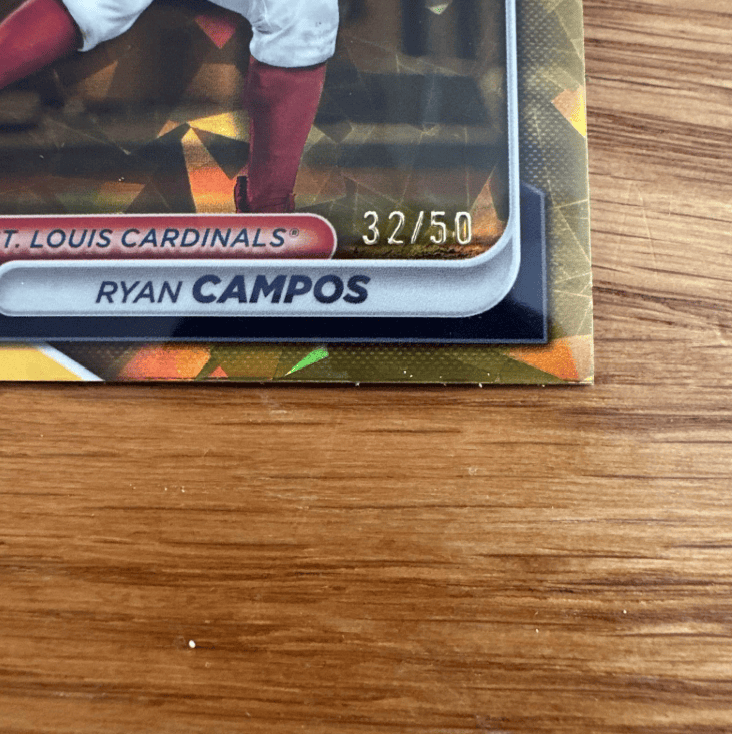
What are Serial Numbered Trading Cards?
What Are Serial Numbered Trading Cards? A Complete Collector’s Guide to Numbered Sports Cards
If you’ve ever opened a pack of sports cards and discovered a card stamped 12/99, 5/25, or 1/1, you may have pulled something special.
Serial numbered trading cards are among the most exciting collectibles in the sports card hobby. From baseball and football to basketball, soccer, hockey, and other trading card categories, these limited-production cards introduce an entirely different level of rarity, exclusivity, and collecting excitement.
But what exactly does serial numbering mean? Does a lower number make a card more valuable? And why are collectors willing to pay a premium for certain numbered parallels?
Whether you’re opening your first hobby box, collecting your favorite athlete, or learning how sports card rarity works, this guide explains everything you need to know about serial numbered trading cards.
What Are Serial Numbered Trading Cards?
Serial numbered trading cards are limited-production collectible cards individually marked with a number identifying a particular copy within a defined print run. The numbering typically appears as a fraction, such as 25/99, indicating that the card is copy number 25 from a limited edition of 99.
The first number identifies the individual copy. The second number identifies the total number of copies in that particular numbered edition.
For example, a baseball card stamped 07/25 is one of only 25 cards produced in that specific numbered version.
Unlike common base trading cards, which may be produced in large quantities, serial numbered sports cards have a stated production limit for the particular version. This gives collectors a clearer understanding of the card’s scarcity.
Serial numbering is commonly used by trading card companies like Topps, Panini, Leaf and Upper Deck on special parallels, autographed cards, premium inserts, and limited-edition releases.
Quick Answer: What Does Serial Numbered Mean on a Trading Card?
A serial numbered trading card is an individually numbered card from a limited print run. A card marked 10/50 identifies copy number 10 from an edition of 50. A card marked 1/1 is a one-of-one, meaning only one copy of that exact numbered version exists.
How Do Serial Numbers Work on Sports Cards?
Serial numbering creates an identifiable production limit for a particular trading card edition.
Manufacturers typically place the number on the front or back of the card using foil stamping, printing, or another production technique.
Common serial numbering formats include:
| Serial Number | Meaning |
|---|---|
| 125/499 | Copy 125 of 499 |
| 075/199 | Copy 75 of 199 |
| 023/099 | Copy 23 of 99 |
| 018/050 | Copy 18 of 50 |
| 007/025 | Copy 7 of 25 |
| 003/010 | Copy 3 of 10 |
| 002/005 | Copy 2 of 5 |
| 1/1 | One-of-one edition |
A card stamped 25/99 and another stamped 75/99 have the same stated edition size. Both belong to a print run of 99.
The first number distinguishes the copies, but it does not change their overall edition rarity.
Important: A card marked 01/99 is not inherently rarer than a card marked 75/99. Both are one of 99 copies. However, certain copy numbers can be more desirable to collectors.
Why Are Serial Numbered Trading Cards Special?
The biggest appeal of serial numbered trading cards is their combination of documented scarcity, visual distinction, and personal collecting significance.
1. Limited Production Creates Scarcity
A traditional base card may have a much larger production run than its numbered parallel.
A parallel limited to 25 copies gives collectors a clear understanding of how many cards exist in that particular edition.
This production limit makes numbered parallels appealing to collectors who want something less widely available.
2. Every Card Has Its Own Individual Number
Serial numbering allows a collector to identify an exact copy within an edition.
Imagine two collectors owning the same basketball player’s Gold parallel numbered to 50.
One owns 08/50. The other owns 39/50.
Both cards belong to the same limited edition, but each has its own unique serial number.
That distinction makes the individual card feel more personal.
3. Special Finishes Add Collector Appeal
Many numbered trading cards feature visual enhancements such as:
- Gold, red, blue, green, or other colored parallels
- Holographic and rainbow foil finishes
- Refractor-style reflective surfaces
- Cracked ice or patterned foil
- Special autograph variations
- Premium card stock and limited-edition designs
These features can make a numbered card visually different from its standard base version.
4. Numbered Cards Create the Thrill of the Chase
One of the most exciting experiences in collecting is discovering an unexpected rare card inside a pack.
Opening a card numbered to 99 is exciting. Pulling a card numbered to 10 can feel even more significant.
Finding a 1/1 card can be a defining moment in a collector’s hobby experience.
Serial numbered cards help create that sense of discovery.
What Is the Difference Between Serial Numbered Cards and Parallel Cards?
A parallel trading card is an alternate version of an existing card, while a serial numbered card is a card with a stated, individually numbered print run.
These concepts overlap, but they are not identical.
A parallel may feature a different border color, holographic treatment, foil pattern, or other visual variation.
Some parallels are serial numbered. Others are not.
For example, a collector might encounter a standard baseball base card, an unnumbered rainbow parallel, a Gold parallel numbered to 50, and a Red parallel numbered to 5.
The Gold and Red versions are both parallels and serial numbered cards.
The unnumbered rainbow card is a parallel but does not have an individually stamped edition number.
Additionally, serial numbering is not limited to parallels. Autographed cards and special inserts may also receive individual numbering.
Serial Numbered Cards vs. Base Cards vs. Inserts
| Card Type | Main Characteristic | Always Numbered? |
|---|---|---|
| Base card | Standard card in a release | No |
| Parallel card | Alternate variation of a card | No |
| Insert card | Card from a distinct subset or design | No |
| Autograph card | Features a player or celebrity signature | No |
| Serial numbered card | Individually numbered limited edition | Yes |
| One-of-one card | Unique version with only one copy | Typically marked 1/1 |
Understanding these differences helps collectors identify the cards they own and research their potential value.
What Does 1/1 Mean on a Trading Card?
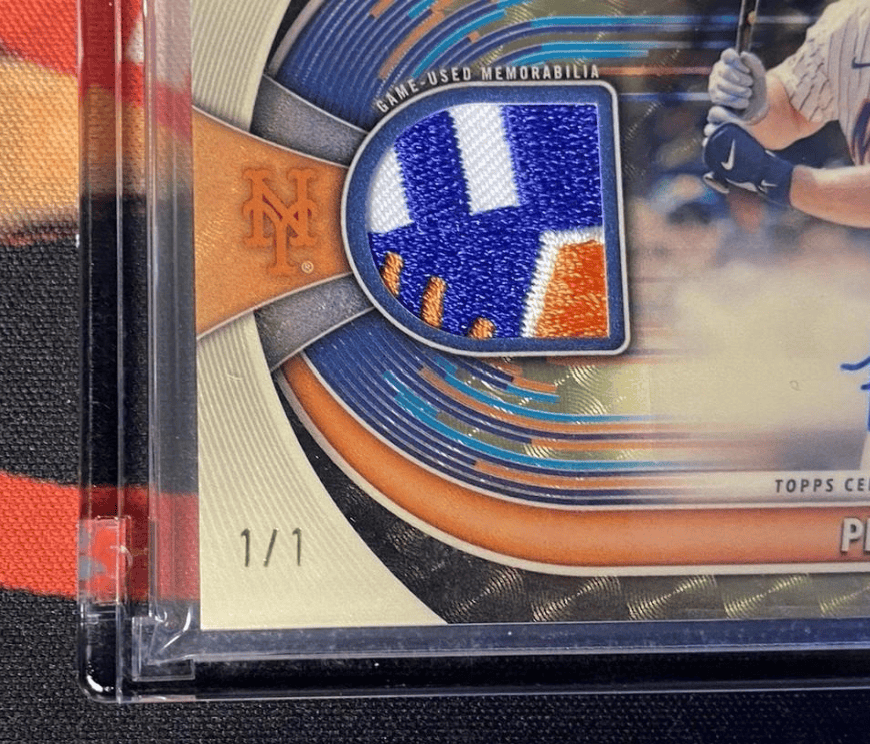
A 1/1 trading card.A 1/1 trading card, pronounced “one of one,” is a card produced as the only copy of that exact edition or variation.
One-of-one cards represent the smallest possible print run for a particular numbered version.
They can include specially designed parallels, premium autograph cards, printing plates, and other exclusive collectibles.
However, an important distinction exists.
A one-of-one does not necessarily mean it is the only trading card ever produced featuring that athlete.
A single athlete may appear in multiple sets, with several different 1/1 cards across different products and variations.
The 1/1 designation applies to that specific edition.
Are 1/1 Trading Cards Valuable?
Some one-of-one cards can command significant prices, especially when they feature popular athletes, highly desirable rookie cards, premium releases, or historically important collectibles.
However, being a 1/1 does not automatically make a card expensive.
A one-of-one card featuring a relatively unknown athlete may attract less demand than a numbered rookie card of a superstar.
Scarcity is only one component of collectible value.
Are Lower Numbered Trading Cards Worth More?
Lower print runs often contribute to higher collector interest, but a smaller edition size does not guarantee a higher selling price.
For example, a desirable rookie card numbered to 10 may command a premium over the same player’s comparable parallel numbered to 99.
However, several other factors influence card values.
What Determines the Value of a Serial Numbered Sports Card?
Player popularity: Cards featuring established stars, promising rookies, and historically significant athletes often attract stronger collector interest.
Rookie status: Numbered rookie cards can be especially attractive because they represent an athlete’s early professional collecting history.
Print run: A card numbered to 5 is scarcer within its particular edition than a comparable card numbered to 100.
Brand and product: Different trading card products have different levels of collector demand, brand recognition, and prestige.
Card condition: Surface quality, centering, edges, and corners can meaningfully affect value.
Professional grading: Grades from established authentication and grading companies may influence collector confidence and resale prices.
Design and rarity tier: Certain parallels have stronger collector followings because of their appearance, tradition, or place within a particular product.
Market demand: Recent comparable sales and buyer interest ultimately influence what collectors are willing to pay.
A useful rule for collectors is:
Scarcity determines how many copies exist. Demand helps determine what buyers will pay.
What Are Jersey Numbered Trading Cards?
A jersey numbered trading card is a serial numbered card whose individual copy number matches the athlete’s uniform number.
For example, suppose a basketball player wears jersey number 23.
A numbered parallel stamped 23/99 would be considered a jersey-number match.
Collectors sometimes call these jersey-number matches or jersey-matched cards.
Because the serial number connects directly to the featured athlete’s identity, certain collectors are willing to pay more for these specific copies.
However, the premium varies by player, product, and collector demand.
Are First and Last Serial Numbers More Valuable?
Some collectors seek specific positions within a numbered edition.
Examples include:
- First off the line: The first numbered copy, such as 01/99. This should not be confused with manufacturer products formally labeled First Off The Line, or FOTL.
- Last numbered copy: The final copy in an edition, such as 99/99.
- Jersey-number match: A copy numbered to match an athlete’s uniform number, such as 23/99.
- Memorable serial numbers: Numbers with personal or cultural significance.
These preferences can create additional demand, but they do not change the actual number of cards produced in the edition.
How Rare Are Serial Numbered Trading Cards?
The rarity of a serial numbered trading card depends on the edition size, the total number of other variations produced, and how the card was distributed.
A card numbered to 499 is more widely produced than an otherwise comparable version numbered to 25.
However, rarity should be evaluated within the context of the entire product.
Consider a hypothetical athlete whose card is released in several versions:
| Card Variation | Example Print Run |
|---|---|
| Standard base card | Not individually numbered |
| Blue parallel | /199 |
| Green parallel | /99 |
| Gold parallel | /50 |
| Orange parallel | /25 |
| Black parallel | /10 |
| Red parallel | /5 |
| Platinum parallel | 1/1 |
Illustrative example only. Actual parallel colors and edition sizes vary by manufacturer and product.
This creates multiple levels of scarcity within a single card design.
Collectors who attempt to acquire every available parallel of a particular player often refer to this pursuit as building the rainbow.
What Is a Trading Card Rainbow?
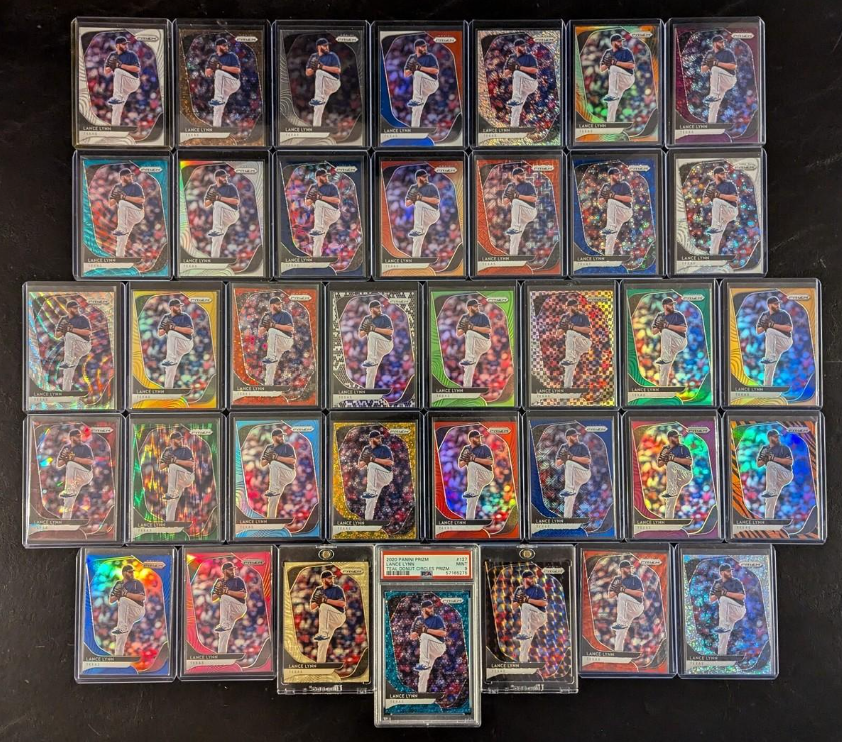
The Rainbow Universe
A trading card rainbow is a collection of the different parallel variations of the same card.
A collector might seek the base card, every available color variation, and each numbered edition, sometimes including the one-of-one.
Completing a rainbow can be challenging, particularly when the collection includes extremely limited parallels.
For player collectors, rainbow collecting can turn a single favorite athlete’s card into a long-term collecting project.
How Can You Tell If a Trading Card Is Serial Numbered?
The easiest way to identify a serial numbered trading card is to examine its front and back for a fraction-style number.
Look for markings such as 15/99, 04/25, or 1/1.
These markings are commonly found near the bottom edge, in a corner, beside an autograph area, or on the back of the card.
How to Identify a Numbered Sports Card
Step 1: Examine both sides. Look for a clearly printed or stamped fraction that identifies an individual copy and total edition size.
Step 2: Identify the manufacturer and set. Determine the product name, release year, player, and card number.
Step 3: Compare the parallel design. Look for unusual foil patterns, border colors, background treatments, or special finishes.
Step 4: Review the official checklist. Compare the card against manufacturer information to confirm its exact parallel and announced numbering.
Step 5: Research comparable cards. Review verified examples and recent sales to better understand the card’s relative scarcity and market demand.
Remember that the regular checklist number printed on the back of a baseball or football card is not the same as an individual serial number.
A card labeled #125 in a set may simply be card number 125 on the checklist.
A card stamped 25/99 identifies an individual copy from a numbered edition of 99.
Do Holographic Trading Cards Have Serial Numbers?
Some holographic trading cards are serial numbered, but many are not.
A holographic finish describes a card’s visual appearance, while serial numbering describes an edition’s individual numbering and production limit.
A card can be holographic without being serial numbered.
Likewise, a serial numbered card can have a traditional non-holographic finish.
For collectors, the combination of premium holographic effects and limited-edition numbering can create an especially appealing collectible.
This is one reason colorful numbered parallels remain a recognizable feature of modern sports card collecting.
Are Serial Numbered Trading Cards Good Collectibles?
Serial numbered cards can be excellent additions to a collection, particularly for collectors who enjoy limited editions, specific athletes, parallel sets, and documented scarcity.
They offer several advantages.
Identifiable edition size: Collectors can see the stated quantity of a particular version.
Personal significance: Individual copy numbers can connect to favorite jersey numbers, dates, or milestones.
Collecting challenges: Numbered parallels give collectors different rarity levels to pursue.
Visual variety: Premium finishes and alternate colors create additional collecting options.
Potential resale appeal: Certain scarce cards attract strong secondary-market interest.
That said, collectible cards should not automatically be treated as financial investments.
Values can fluctuate based on player performance, popularity, market cycles, condition, and other factors.
Collecting something meaningful to you is often the most rewarding place to start.
Can You Create Custom Serial Numbered Trading Cards?
Custom trading cards offer a way to bring limited-edition collecting concepts beyond traditional professional sports card releases.
For example, a youth baseball team might create a special commemorative card celebrating a championship season.
A soccer league could develop a collector series highlighting standout performances.
A professional athlete could launch a limited-edition card release with multiple design variations.
Custom trading card projects may incorporate concepts such as numbered editions, special finishes, exclusive artwork, and limited release quantities, depending on the production options available.
Bringing the Collector Experience to Your Own Cards
At NCASE CARDS, we believe the excitement of collecting should not be limited to professional athletes.
Our custom trading cards allow athletes, teams, leagues, schools, and organizations to turn meaningful moments into professional-quality collectibles.
From personalized player cards to premium holographic designs and special collectible projects, NCASE CARDS helps bring the look and excitement of the trading card hobby to athletes at every level.
Whether you’re celebrating a championship, recognizing an individual athlete, or developing a custom collectible release, the inspiration behind limited-edition trading cards opens up exciting creative possibilities.
Explore NCASE CARDS and discover how you can turn your favorite moment into a custom trading card.
Frequently Asked Questions About Serial Numbered Trading Cards
What is a serial numbered trading card?
A serial numbered trading card is a limited-edition card marked with an individual copy number and a total print run. For example, 15/99 means the card is copy 15 from a numbered edition of 99.
What does /99 mean on a sports card?
A sports card numbered to 99 belongs to an edition limited to 99 individually numbered copies. A marking such as 25/99 identifies the specific copy within that edition.
What does /25 mean on a trading card?
A card stamped 07/25 is copy number seven from a limited edition of 25. The denominator indicates the stated print run of that particular version.
What does 1/1 mean on a sports card?
A 1/1 sports card is a one-of-one collectible. It is the only copy produced in that exact numbered variation, although other cards featuring the same athlete may exist.
Are serial numbered trading cards rare?
Serial numbered trading cards have defined edition sizes, making their relative scarcity easier to identify. A card numbered to 5 is rarer within its edition than a comparable card numbered to 100. Overall scarcity also depends on the other versions released.
Are serial numbered cards more valuable?
Sometimes. Scarcity can increase desirability, but card value also depends on the athlete, set, condition, grade, collector demand, and comparable sales. Numbering alone does not guarantee value.
Is a 1/1 card always worth more than a /10 card?
No. A one-of-one card is scarcer within its specific edition, but a desirable /10 rookie card or autograph can sell for more than an unrelated 1/1 card with limited demand.
What is the difference between a serial numbered card and a parallel?
A parallel is an alternate version of a trading card, often distinguished by color, finish, or design. A serial numbered card is individually marked with a limited edition number. Some parallels are serial numbered, while others are not.
What is a jersey match trading card?
A jersey match is a numbered card whose individual serial number matches the athlete’s uniform number. For example, 23/99 would be a jersey match for an athlete who wears number 23.
Is 01/99 more valuable than 50/99?
Not necessarily. Both cards are from the same 99-copy edition. Some collectors prefer the first numbered copy, but its value depends on actual buyer demand.
Are all holographic sports cards numbered?
No. Holographic refers to a card’s reflective visual finish. Serial numbering identifies a limited edition. A card can have one feature without the other.
Can autographed trading cards be serial numbered?
Yes. Some autographed trading cards are released as individually numbered limited editions, while others are unnumbered. The exact print run depends on the product.
How do you know if a numbered trading card is authentic?
Check the card’s design, serial numbering, manufacturer, release details, and official product checklist. Reputable professional authentication services can provide additional verification when appropriate.
Does professional grading change a card’s serial number?
No. Professional grading evaluates the card and assigns a grade or authentication result. It does not change the manufacturer’s original individual serial number.
Where can I find the serial number on a trading card?
Serial numbers typically appear on the front or back of a card, often in a corner, near the bottom edge, or beside a special feature such as an autograph. Their placement varies by product.
Can a custom trading card be produced as a numbered limited edition?
Yes. Custom collectible projects can be planned around limited production quantities and individually numbered copies when supported by the manufacturer. Numbering methods, production controls, and available finishes depend on the provider.
Final Thoughts: Why Serial Numbered Trading Cards Matter
Serial numbered trading cards represent one of the most recognizable ways that scarcity and individuality come together in the collecting hobby.
A card numbered to 99, 25, 10, or even 1/1 is more than a standard card with an additional number. It belongs to a specifically identified edition, and its individual numbering can make it especially meaningful to the person who owns it.
For some collectors, the appeal is rarity. For others, it’s chasing their favorite athlete, building a rainbow, discovering a jersey match, or owning an unusual piece of sports memorabilia.
Ultimately, the most meaningful trading cards often tell a story.
At NCASE CARDS, we believe every athlete has a story worth collecting.
NCASE the Moment.